
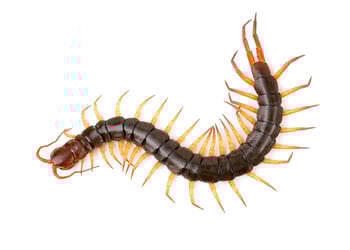
COMMON TYPES OF centipedes IN YOUR HOME
Determining the species of centipede you are dealing with can be a difficult task. Not all centipedes found inside of homes are the same. Different species behave in different ways, prefer different environments, and require unique approaches to control. Correctly identifying the type of centipede you are dealing with is important to treat the issue. While some centipedes thrive in indoor conditions, others sneak in accidentally through various openings. Understanding what you are dealing with helps to explain where they are coming from, why they are present, and how EcoShield Pest Solutions can help!
HOUSE CENTIPEDES
House centipedes are the most common species found inside of homes. Well adapted to indoor environments, house centipedes are frequently discovered in basements, bathrooms, and moisture prone areas. Primarily, house centipedes feed on other insects and their presence indicates larger pest or moisture issues in your home.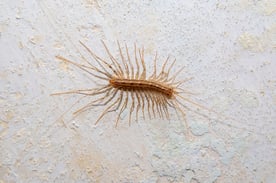
- 1″ – 1 1/2″ in size
- Yellowish-gray with dark striping
- Equipped with long legs and antennae
- Primarily active at night
STONE CENTIPEDES
Stone centipedes are less common to be found indoors, however they may enter homes accidentally, especially during periods of heavy rain or temperature changes. Typically, stone centipedes live outdoors under rocks, mulch, and debris, but can potentially wander into your establishment through openings in foundation.
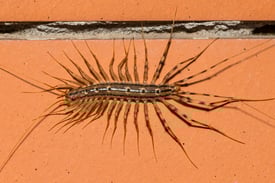
- Smaller than house centipedes, under 1"
- Brown, may display a reddish tint
- Commonly found in basements or ground level areas
SOIL CENTIPEDES
Soil centipedes primarily live outdoors in soil and leaves, but can enter your home through gaps or cracks at a ground level. These types of centipedes are less frequent to be seen because they remain hidden and move at a slow pace. Indoor presence of this particular species usually indicates a moisture or soil-related entry issue.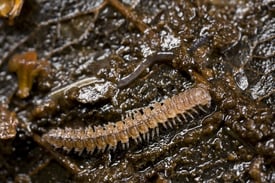
- Long and narrow
- Yellowish to light brown
- Often mistaken for worms at first glance
- Typically found in crawl spaces or near foundation
WHAT ARE HOUSE CENTIPEDES?
House centipedes (scutigera coleoptrata) are the most common centipede that homeowners encounter in the United States. This species can be easily identified by their long legs and fast movement. Although house centipedes are most frequently seen running across floors or climbing up walls, they spend most of their time hidden in dark areas.
House centipedes prefer environments with moisture and shelter. As a result of this, they are commonly found in basements, bathrooms, crawl spaces, and dark spaces. Their presence is indicative of excess humidity, water sources, or open access points. House centipedes are predatory creatures, who feed on other insects such as ants, spiders, and flies. While they do not cause structural damage, their presence usually indicates underlying conditions that support pest activity. Effective control requires more than removing individual centipedes.
Prevention is usually much easier and more manageable than attempting to treat an infestation. If you’ve experienced centipede problems in the past or are concerned that your home may be at risk, contact EcoShield for an inspection and front-line treatment plan. Protecting yourself prior to centipedes becoming a problem is the single best way to avoid them altogether. Our year-round Shield Protection Plan can also prevent and control centipedes before they become a problem.
SEE CENTIPEDES? TAKE THESE STEPS
If you see one centipede, it’s safe to say that there are more crawling around in your walls, between cracks, and reproducing where you can’t see them. Your centipede problem will not go away on its own, and some pest control methods are ineffective.
Want to get rid of your centipedes for good? Follow these steps:
- Step 1: Call EcoShield Pest Solutions today for a free estimate.
- Step 2: Avoid trying to treat your beetle problem before our team of experts can properly identify the type of centipede invading your property.
- Step 3: Schedule a time that works best for you. The pest control technicians at EcoShield always strive to accommodate your schedule.
- Step 4: Watch your pest control problem disappear and eliminate your stress and worry.
At EcoShield, we help you through every step of the pest control treatment process. Whether you have general questions about centipedes in your home or you need to get rid of a damaging infestation, our experts are trained to answer any questions and provide the best solution for you.
For a FREE No-Obligation Estimate, please call our office or fill out the form at the top right section of this page.