
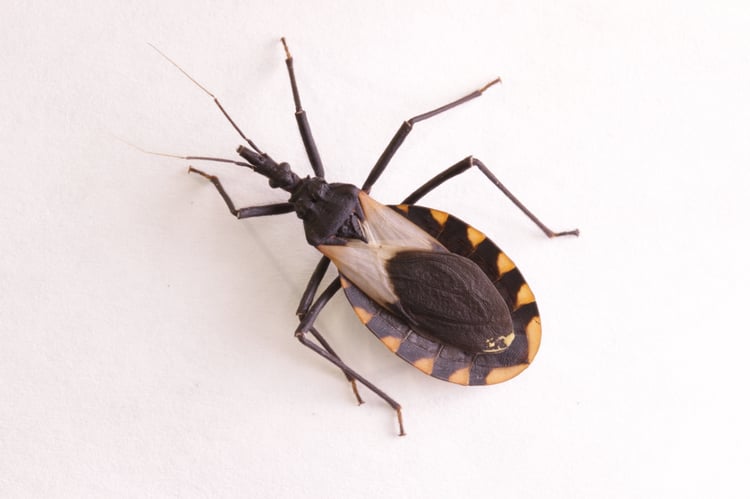
Kissing Bugs
Kissing bugs, also known as cone-nose bugs, are blood-sucking parasites that can pose serious health risks to humans and pets. Although they primarily live outdoors in animal nests or piles of wood, they often end up in homes during the late spring and summer months. Once they are inside, these nocturnal pests move discreetly, hiding in tight crevices during the day. The "kissing bug" name comes from their tendency to bite us near the face and mouth while we are asleep.
Professional intervention and identification is essential when dealing with the kissing bug. It is common for this pest to carry diseases, especially with the parasite responsible for Chagas disease. At EcoSheild, our specialized treatment plan is designed to identify and eliminate active populations of the kissing bug to protect you and your household from these dangerous invaders.
Schedule a FREE Estimate
COMMON TYPES OF Kissing Bugs IN YOUR HOME
Although many kissing bug species remain in the wild, there are four specific types that are notorious for infiltrating homes. Check out some of the characteristics of these kissing bugs to help you correctly identify your pest problem.
EASTERN CONE-NOSE
The eastern cone nose (triatoma sanguisuga) is the most widespread kissing bug species in the United States. Although it is primarily a wild insect, they do frequently invade homes because of their attraction to artificial lighting and the presence of backyard wildlife or wooded areas. If you encounter an eastern-cone nose, do not touch it with your bare hands. It is best to use a glove or container to capture it. If the bug has been killed, immediately disinfect the surface with disinfecting cleaner and wash your hands thoroughly with soap and water. Unlike many tropical species of the kissing bug, the eastern cone-nose is unlikely to transmit the Chagas disease.
- 16 to 21mm in size (3/4" inch)
- Orange and red horizontal markings on wings
- Slender beak used for feeding, antennae with six segments
WESTERN CONE-NOSE
Primarily found in California and throughout the southwest, the western cone-nose (triatoma protracta) is smaller than its eastern relative, sporting a solid black or brown body. This pest is known to take flight during warm summer and fall evenings to look for new hosts. Homeowners in foothills or rural developments are the most at risk, as these bugs are strong fliters that can enter homes through tiny gaps, window screens, or door thresholds.
- Approximately 1/2" to 3/4" in
- Solid dark brown or black body
- Strong flyers attracted to lights, especially during warm summer nights
TEXAS KISSING-BUG
The Texas kissing bug is one of the most frequent home invaders in the south-central areas of the United States, especially in Texas and New Mexico. This insect displays a black body with yellowish-orange horizontal stripes and a similar tint on their forewings. It is common for Texas kissing bugs to reside near homes, dog kennels, or under porches. As a result of their high activity, they frequently test positive for the Chagas parasite, making it a major focus for EcoShield pest solutions in this region.
- About 1" in length
- Deep black body with yellow-orange horizontal stripes
- Tendency to live in houses and dog kennels
BIG-EYED KISSING BUG
Predominantly found in the arid desert regions of Arizona and Texas, the big-eyed kissing bug (triatoma rubida) is easily distinguished by its reddish-brown tiny and large protruding eyes. Known for their massive dispersal flights in late spring and early summer, these bugs are attracted to artificial lights, and will be seen clustered around porch lamps or homes in search of heat. In some urban desert areas this is the most common species encountered by homeowners and the big-eyed kissing bug becomes a frequent cause of concern.
- 3/4 to 1" in length
- Reddish-brown coloration with large protruding eyeballs
- Pale or reddish tint around outer edge of their abdomen
- Most active in the late spring season
WHAT ARE Kissing Bugs?
Understanding the hevaior and health risks of kissing bugs is essential to maintaining a safe household in regions where these pests are prominent. Kissing bugs are primarily blood-feeding parasites that rely on hosts such as rodents, wildlife, and humans for survival. Since kissing bugs feed on blood to progress through their life cycle, they are highly motivated to enter living spaces where hosts are present.
Prevention is usually much easier and more manageable than attempting to treat an infestation. If you’ve experienced ant problems in the past or are concerned that your home may be at risk, contact EcoShield for an inspection and front-line treatment plan. Protecting yourself prior to beetles becoming a problem is the single best way to avoid them altogether. Our year-round Shield Protection Plan can also prevent and control beetles before they become a problem.
SEE KISSING BUGS? TAKE THESE STEPS
If you see one kissing bug, it’s safe to say that there are more crawling around in your walls, between the cracks, and reproducing where you can’t see them. Your kissing bug problem will not go away on its own, and some pest control methods are ineffective.
Want to get rid of your kissing bugs for good? Follow these steps:
- Step 1: Call EcoShield Pest Solutions today for a free estimate.
- Step 2: Avoid trying to treat your kissing bug problem before our team of experts can properly identify the type of kissing bugs invading your property.
- Step 3: Schedule a time that works best for you. The pest control technicians at EcoShield always strive to accommodate your schedule.
- Step 4: Watch your pest control problem disappear and eliminate your stress and worry.
At EcoShield, we help you through every step of the pest control treatment process. Whether you have general questions about kissing bugs in your home or you need to get rid of a damaging infestation, our experts are trained to answer any questions and provide the best solution for you.
For a FREE No-Obligation Estimate, please call our office or fill out the form at the top right section of this page.