
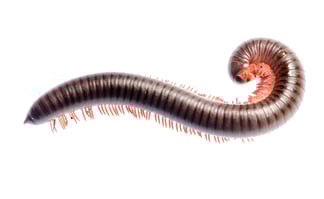
COMMON TYPES OF MILLIPEDES IN YOUR HOME
Identifying beetles can be challenging without professional experience. Although there are hundreds of thousands of beetle species worldwide, only a small number of them frequently invade homes and businesses. Despite this, these species can cause significant problems when left untreated. Most residential infestations fall into a few categories based on what beetles eat and where they like to hide. It can be difficult to distinguish one type of beetle from another. Although there are over 10,000 different species of beetles worldwide, you’re most likely to experience an infestation from carpet beetles, pantry beetles, powderpost beetles, or ground beetles.
Check out some of the characteristics of these beetles to help you correctly identify your pest problem.
GREENHOUSE MILLIPEDE
The greenhouse millipede, also known as the garden or hothouse millipede is a non-native species from Asia that has become a frequent residential pest throughout the United States. Unlike other species, these millipedes are blind and rely on their antennae to navigate though dark, moist environments that they thrive in. Commonly, this species is spotted in greenhouses, mulch, or compost piles. As a result of their rapid reproduction, they quickly outgrow their natural outdoor habitats, leading to major migrations in basements and garages where the moisture conditions suit them.
-
Less than 1" in length
-
Flattened, reddish to dark brown body
-
Thrives in moist, dark environments
NORTH AMERICAN MILLIPEDE
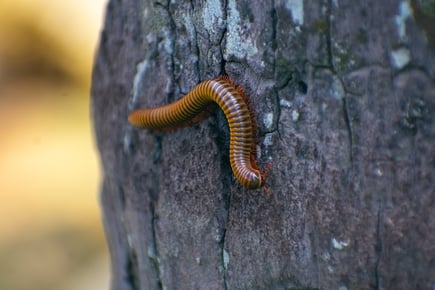
Also known as the American Giant Millipede, this is the largest species of millipede that homeowners encounter in the eastern United States. These millipedes can grow up to 5 inches in length, featuring a tube-like body that is dark gray or black with orange rings at each segment. Although they primarily live in forests with rotting logs and an abundance of leaves, they will make their way into homes in search of high-humidity areas that better suit them. The North American millipede also feature a unique defense mechanism, curling up into a tight spiral and releasing a discharge that may cause mild irritation to the skin.
-
4 to 5" in length
-
Orange rings at each segment
- Features a defense mechanism if threatened
Prevention is usually much easier and more manageable than attempting to treat an infestation. If you’ve experienced millipede problems in the past or are concerned that your home may be at risk, contact EcoShield for an inspection and front-line treatment plan. Protecting yourself prior to millipedes becoming a problem is the single best way to avoid them altogether. Our year-round Shield Protection Plan can also prevent and control millipedes before they become a problem.
SEE Millipedes? TAKE THESE STEPS
If you see one millipede, it’s safe to say that there are more crawling around in your walls, between the cracks, and reproducing where you can’t see them. Your beetle problem will not go away on its own, and some pest control methods are ineffective.
Want to get rid of your millipedes for good? Follow these steps:
- Step 1: Call EcoShield Pest Solutions today for a free estimate.
- Step 2: Avoid trying to treat your millipede problem before our team of experts can properly identify the type of millipede invading your property.
- Step 3: Schedule a time that works best for you. The pest control technicians at EcoShield always strive to accommodate your schedule.
- Step 4: Watch your pest control problem disappear and eliminate your stress and worry.
At EcoShield, we help you through every step of the pest control treatment process. Whether you have general questions about millipedes in your home or you need to get rid of a damaging infestation, our experts are trained to answer any questions and provide the best solution for you.
For a FREE No-Obligation Estimate, please call our office or fill out the form at the top right section of this page.