
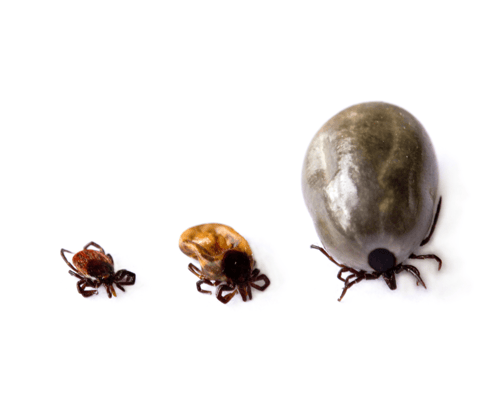
COMMON TYPES OF TICKS IN YOUR HOME
Identifying ticks can be challenging without professional experience due to their sall size and similar appearances. Although there are hundreds of tick species worldwide, only a small number of them are commonly found in residential areas and pose significant health risks. Despite this, these species can transmit serious illnesses when left unmanaged. Most tick encounters fall into a few categories based on the species present in your area, their preferred hosts, and the diseases they carry.
Check out some of the characteristics of these ticks to help you correctly identify your pest problem:
BLACKLEGGED TICK (DEER TICK)
Blacklegged ticks are the most prominent tick species in the United States. Primary carriers of Lyme disease, these ticks are most active during spring and fall. The deer tick prefers wooded, humid environments with substantial leaf litter. The bites of this species often go unnoticed due to their small size, but early detection is crucial to prevent disease transmission.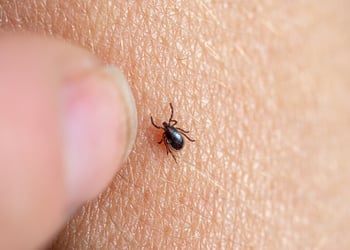
- 1/8' (adult), 1/16" (nymph - similar size to a poppy seed)
- Dark brown to black body, orange around the legs
- Transmits Lyme disease, and various other illnesses
AMERICAN DOG TICK
American dog ticks are widespread across the United States and become especially active during spring and summer months. These ticks prefer areas with little to no tree cover, making them a threat to grassy fields and walking paths. American dog ticks are larger and tend to be easier to spot than blacklegged ticks, but they still pose serious health risks if left attached for extended periods of time.
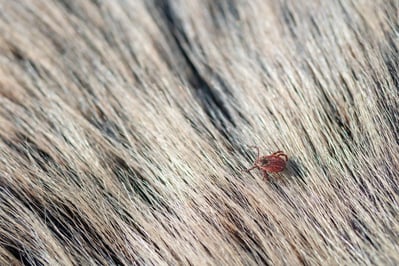
- 3/16' - 5/8" in
- Brown body with white or gray markings
- Leaves red bite that triggers swelling and irritation in the area
- Transmits Rocky Mountain spotted fever, tularemia
LONE STAR TICK
Lone star ticks are aggressive biters found throughout Southeast regions of the United States. These ticks can be easily identified by the distinct white dot on their back. Lone star ticks are active starting in the early spring months through the fall, pursuing hosts endlessly.
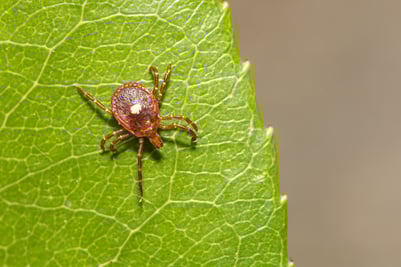
- 1/8"-1/4" in size
- Reddish-brown to black
- Infests in various wood, trims, tools, or decor.
- Often identified by fine, powder-like sediment near exit holes.
PREVENTING TICK BITES & WHAT TO DO IF Bitten
Prevention is the most effective way to protect yourself, family, and pets from tick-borne illnesses. While professional tick control significantly reduces populations on your property, personal precautions when spending time outdoors is just as important. Understanding how to prevent tick bites and respond swiftly if bitten can make the difference between a minor incident and serious health concern.
Prevention
- Wear protective clothing: Long sleeves, pants, closed-toe shoes, especially if walking through wooded areas or tall grass
- Stay on clear paths
- Perform tick checks: Thoroughly inspect yourself, children, and pets after spending time outdoors. Paying attention to hairlines, armpits, groin, behind knees, or between toes can be crucial.
- Use EPA-approved insect repellents
HOW TO PROPERLY REMOVE A TICK
If you find a tick attached to your skin, remove it as quickly as possible to reduce the risk of disease transmission.
- Use fine-tipped tweezers to grasp the tick as close to the skin's surface as possible
- Pull upward steadily, without twisting the insect or causing mouthparts to break off
- Clean the bite area and your hands thoroughly with, rubbing alcohol, antibacterial soap and warm water.
- Dispose of the tick properly by submerging it in alcohol, or flushing down the toilet
Never crush a tick with your fingers, use nail polis, petroleum jelly, or heat to remove a tick. These methods are ineffective and can increase transmission of disease.
When To SEEK MEDICAL ATTENTION
Contact a healthcare provider if you experience any of the following after a tick bite:
- Developing rash, especially in a bullseye pattern
- Fever, chills, or flu-like symptoms within 30 days of a bite
- Severe headache, muscle aches, or joint pain
- Fatigue or unexplained weakness
- You are unable to remove the tick
Early treatment with antibiotics is highly effective for most tick-borne diseases, but prompt medical attention is crucial. Do not wait for symptoms to worsen before seeking care.
Prevention is much easier and more manageable than attempting to control tick populations after they've established themselves on your property. If you’ve experienced tick problems in the past or are concerned that your property may be at risk, contact EcoShield for an inspection and front-line treatment plan. Protecting your property before ticks become a problem is the sigle best way to reduce your family's exposure to dangerous tick-borne illnesses.
SEE TICKS? TAKE THESE STEPS
If you find one tick on yourself, any family members, or pets, it’s safe to say that there are more hiding in your yard's vegetation, leaf litter, or wodded edges waiting for their next host. Your tick problem will not go away on its own, and DIY pest control methods are ineffective at reducing tick populations.
Want to protect your family and pets from ticks for good? Follow these steps:
- Step 1: Call EcoShield Pest Solutions today for a free estimate.
- Step 2: Avoid trying to treat your tick problem before our team of experts can properly identify the type of tick invading your property.
- Step 3: Schedule a time that works best for you. The pest control technicians at EcoShield always strive to accommodate your schedule.
- Step 4: Enjoy your outdoor spaces with confidence.
At EcoShield, we help you through every step of the pest control treatment process. Whether you have general questions about ticks on your property or you need to eliminate an active infestation, our experts are trained to answer any questions and provide the best solution for you.
For a FREE No-Obligation Estimate, please call our office or fill out the form at the top right section of this page.