
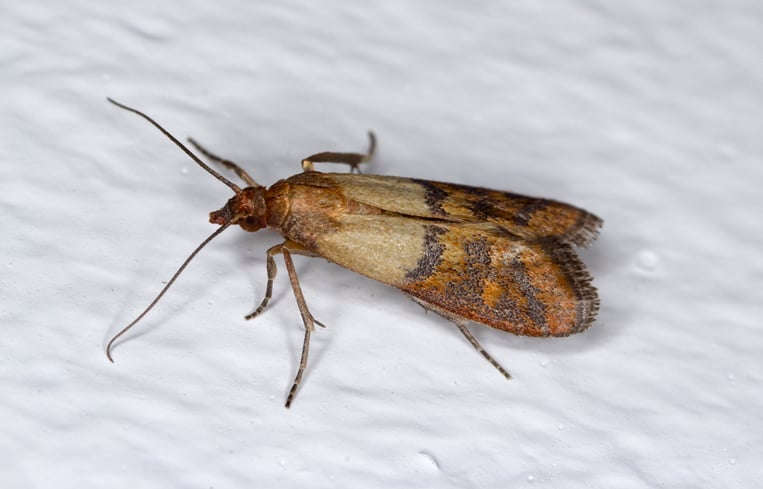
COMMON TYPES OF Grain Pests IN YOUR HOME
Identifying pantry pests can be challenging without professional experience. Although there are various species of insects that can inhabit a kitchen, only a handful invade your pantry or food storage itself. Despite their small size, grain and pantry pests can wreak havoc, causing significant contamination and waste if they are left untreated.
Check out some of the characteristics of these common grain pests to help you correctly identify your pest problem:
INDIAN MEAL MOTHS
Indian meal moths are the most common silk-spinning pests found in pantries across the United States. Fully hatched adult moths are the most visible, as they are commonly seen flying in a zig-zag pattern around the kitchen or pantry itself. Eliminating the visible, flying moths will not take care of the issue. The larvae are truly responsible for the havoc, hatching as discreet "wax-worms" that spin webbing inside food containers, contaminating everything from flour, grains, nuts, and much more. 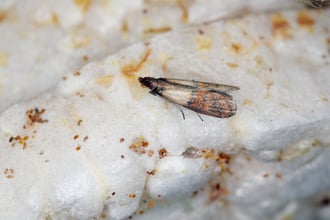
- Approximately 1/10" in size
- Full grown moth appears dark brown, slender, and takes flight.
- Larvae appear as worms, spinning webs, found in almost any pantry food source.
SAWTOOTHED GRAIN BEETLES
Tiny, yet slender beetles, named after their six saw-shaped "teeth" located on either side of their thorax. Since these insects are incredibly flat, they can easily crawl into sealed crackers, cereal boxes, or even vacuum-sealed pouches that might appear to be airtight. Unlike many other pantry pests, the sawtoothed grain beetle does not fly, but it can navigate quickly through your shelves and into your food supplies.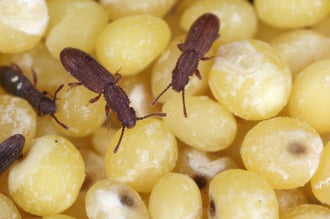
- Approximately 1/10" in size
- Dark brown, extremely flat and slender with distinctive teeth
- Infests flour, nuts, and processed goods
RICE AND GRANARY WEEVILS
Weevils are among the most destructive pantry pests because they attack grains from the inside out. Unlike other pests who scavenge on the surface of food, weevils use their elongated snouts to drill into various grains or seeds to lay their eggs. As a result, infestations are often completely hidden inside the food until the adult beetlebeetle eats its way out, leaving a visible hole in the grain.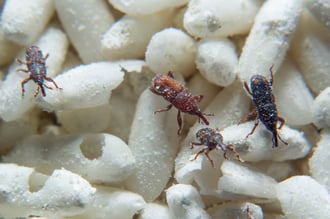
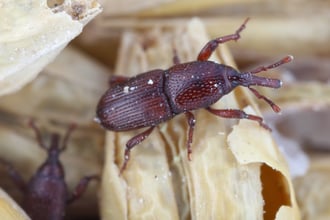
- 1/8"-3/16" in size
- Reddish-brown to black with a distinctive snout
- Rice weevils have red spots on their backs and take flight; Granary weevils cannot fly and lack a spotting pattern
- Infests whole grains, rice, wheat, or corn products
CONFUSED FLOUR BEETLES
Despite the name of these insects, these pests are extremely efficient at locating resources in your home. The confused flour beetle is one of the most common insects found in flour mills and home pantries. Unlike weevils, these beetles lack the mouthparts to feed on whole grains; instead, they target processed dry goods. The presence of these insects often leaves food with an unpleasant odor and taste due to the secretions left behind.
- 1/4"-1/2" an inch in size
- Dark brown or black
- Fast movers, commonly found in basement or entry points
WHAT ARE PANTRY PESTS?
“Pantry pest” is a general term used to describe several species of small beetles and moths that infest stored food products. While homeowners might assume they are dealing with a single stray insect, panty infestations are typically established colonies. In most instances, these pests are introduced to your home through a compromised, but packaged food source that already contain the insect's eggs or larvae. From the moment they establish themselves in your pantry they can spread quickly, contaminate your food, and be incredibly difficult to eliminate without EcoShield's assistance.
Pantry and grain pests are capable of chewing through thin plastic, cardboard, and foil packaging. Even the most well-maintained kitchens may experiences infestations due to contaminated items that have been brought home from the grocery store.
Prevention is usually much easier and more manageable than attempting to treat an infestation. If you’ve experienced ant problems in the past or are concerned that your home may be at risk, contact EcoShield for an inspection and front-line treatment plan. Protecting yourself prior to beetles becoming a problem is the single best way to avoid them altogether. Our year-round Shield Protection Plan can also prevent and control beetles before they become a problem.
SEE pantry pests? TAKE THESE STEPS
If you see one grain or pantry pest, it’s safe to say that there are more crawling around in your cupboards, between the cracks, and reproducing where you can’t see them. Your grain and pantry pest problem will not go away on its own, and at-home pest control methods are ineffective.
Want to get rid of your pantry pests for good? Follow these steps:
- Step 1: Call EcoShield Pest Solutions today for a free estimate.
- Step 2: Avoid trying to treat your pest problem before our team of experts can properly identify the type of ant invading your property.
- Step 3: Schedule a time that works best for you. The pest control technicians at EcoShield always strive to accommodate your schedule.
- Step 4: Watch your pest control problem disappear and eliminate your stress and worry.
At EcoShield, we help you through every step of the pest control treatment process. Whether you have general questions about pantry pests in your home or you need to get rid of a damaging infestation, our experts are trained to answer any questions and provide the best solution for you.
For a FREE No-Obligation Estimate, please call our office or fill out the form at the top right section of this page.