
Finding a wasp nest around your home can quickly turn a normal day into a frustrating and potentially dangerous situation. Whether you discover a nest beneath your porch, notice wasps entering a wall, or spot a large nest hanging from a tree, you may be wondering what to do next.
The good news is that professional pest control can safely address most wasp and stinging insect problems. However, wasp nest removal costs can vary depending on several factors, including the type of wasp, location and size of the nest, accessibility, treatment method, and pest control company you choose.
Before you start comparing prices, it helps to understand what you are dealing with.
What Does a Wasp Nest Look Like?
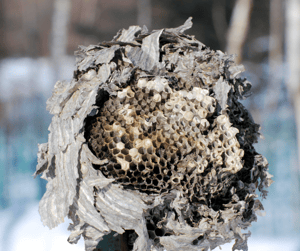 Not every wasp nest looks the same. Different species build different types of nests, and knowing what you are looking at can help determine how the colony should be treated.
Some nests are easy to see, while others may be hidden inside a wall, attic, chimney, tree, or underground. An active nest may also contain significantly more wasps than you realize.
Paper Wasp Nests
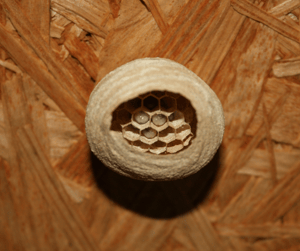
Paper wasps typically build open, umbrella-shaped nests made from a paper-like material. These nests are commonly found under roof eaves, porch ceilings, decks, railings, sheds, and other sheltered areas.
Because paper wasp nests are usually exposed, they can often be identified without much difficulty. However, homeowners should still avoid disturbing an active nest.
Yellowjacket Nests
Yellowjackets can build nests in a variety of locations, including underground, inside wall voids, beneath decks, in attics, and in other protected areas.
Some yellowjacket colonies can become very large. A nest hidden inside a wall or underground can be particularly difficult to treat because the visible wasp activity may only represent a portion of the colony.
Bald-Faced Hornet Nests
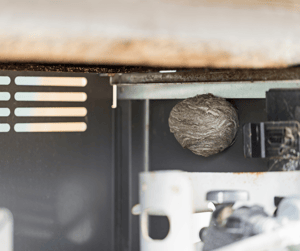
Bald-faced hornets build enclosed, papery nests that are often found hanging from trees, shrubs, homes, garages, and other structures.
Despite their name, bald-faced hornets are actually a type of yellowjacket. Their nests can grow relatively large and may contain a substantial colony by late summer and fall.
European Hornet Nests
European hornets may nest in hollow trees, attics, wall voids, chimneys, and other protected cavities. They may also use existing openings or spaces rather than constructing a completely exposed nest.
Because these nesting locations can be difficult to access, professional treatment may be necessary.
Where Do Wasps Build Nests?
Wasps are opportunistic when it comes to finding a place to establish a colony. They generally look for locations that offer shelter while providing access to food and water.
Common locations for wasp nests around homes include:
- Under roof eaves and overhangs
- Inside attics
- Within wall voids
- Under decks and porches
- Inside sheds and garages
- Around chimneys and vents
- In trees and shrubs
- Inside hollow trees
- Underground
- Beneath outdoor structures and furniture
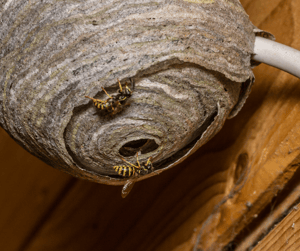 The location of a nest can have a significant impact on the difficulty and cost of professional wasp nest removal.
For example, treating an exposed paper wasp nest beneath an easily accessible eave may be relatively straightforward. A yellowjacket colony hidden inside a wall or an enclosed nest high in a tree can require a more involved approach.
What Types of Wasps Are Common Around Homes?
Several types of stinging insects can become a nuisance around residential properties. Yellowjackets, paper wasps, bald-faced hornets, and European hornets are among the species homeowners may encounter. While they are all members of the wasp family, each species has different nesting habits, behaviors, and levels of defensiveness.
Yellowjackets are often found nesting underground, inside wall voids, beneath decks, or in other protected spaces. Paper wasps typically build their open, umbrella-shaped nests beneath roof eaves, porches, railings, and other sheltered areas. Bald-faced hornets construct enclosed, paper-like nests that are commonly found hanging from trees, shrubs, or structures, while European hornets may nest inside hollow trees, attics, chimneys, and wall voids.
.png?width=300&height=251&name=Mud%20Dauber%20Nest%20(1).png) Some species build nests in the open, making them relatively easy to spot, while others prefer concealed locations that can make the source of an infestation much harder to identify. A homeowner may notice wasps entering and exiting a small opening without realizing there is an entire colony hidden behind it.
Some species build nests in the open, making them relatively easy to spot, while others prefer concealed locations that can make the source of an infestation much harder to identify. A homeowner may notice wasps entering and exiting a small opening without realizing there is an entire colony hidden behind it.
Correct identification is important because wasp removal methods should be based on the species, nesting location, colony size, and extent of the infestation. Treating an exposed paper wasp nest, for example, can require a very different approach than addressing a yellowjacket colony hidden inside a wall. Identifying the insect and locating the nest allows a pest control professional to determine the safest and most effective treatment approach.
How Much Does It Cost to Get Rid of a Wasp Nest?
So, how much does professional wasp nest removal cost?
There is no universal price because every nest is different. In many cases, homeowners can expect a straightforward, one-time wasp treatment to fall somewhere around $100 to $250. More complicated situations can cost $250 to $500 or more, particularly when nests are large, difficult to access, located inside a structure, or require specialized treatment.
These figures are general ranges, not guaranteed prices. Actual costs vary by location, company, nest type, and the specific circumstances of the infestation.
What Factors Affect Wasp Nest Removal Cost?
Several factors can influence the price of professional wasp removal.
Nest location: A nest that is easily accessible from the ground generally requires less equipment and time than one located high in a tree or inside a wall.
Nest size: Larger colonies may require more extensive treatment than small or newly established nests.
Type of stinging insect: Different species have different nesting behaviors and may require different treatment strategies.
Accessibility: If a technician needs specialized equipment or additional time to safely reach the nest, the cost may be higher.
Number of nests: Treating multiple nests or addressing widespread stinging insect activity may require additional service.
Treatment method: Different companies may use different treatment products and techniques depending on the situation.
Follow-up service: Some companies include follow-up visits or guarantees, while others charge separately for additional treatments.
When comparing prices, make sure you understand exactly what is included in the quoted price.
Why DIY Wasp Nest Removal Isn't Always Cheaper
 DIY wasp nest removal can seem like the obvious budget-friendly option. After all, a can of wasp spray may cost only a few dollars compared with hiring a professional.
The problem is that the cost of the product isn't the only thing to consider.
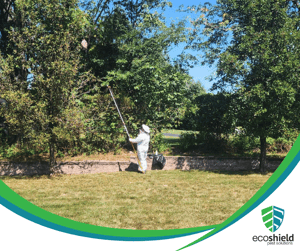
An active wasp colony can become extremely defensive when its nest is disturbed. Attempting to spray, knock down, or otherwise remove a nest puts you within close range of potentially aggressive stinging insects.
The risk can be even greater when the nest is located on a ladder, inside a wall, in an attic, underground, or somewhere else that is difficult to access safely.
DIY Treatment May Not Eliminate the Colony
Another issue with DIY wasp removal is that treating the visible nest does not always address the entire problem.
If wasps are nesting inside a wall, attic, or other concealed location, spraying the insects you see may not eliminate the colony. Even with an exposed nest, an unsuccessful treatment may leave you dealing with continued activity.
That can mean purchasing additional products and making multiple attempts to solve the problem.
What initially looks like a $10 or $20 DIY solution can ultimately cost more in products, time, repairs, and professional treatment if the problem persists.
Most importantly, professional pest control can help reduce the risks associated with approaching and disturbing an active nest.
How Much Does Professional Wasp Removal Cost Compared With DIY?
 When comparing DIY and professional wasp removal, it's important to look beyond the initial price.
A DIY approach may cost as little as the price of a can of insecticide. Professional treatment typically costs more upfront, but it includes the knowledge and experience needed to identify the pest, locate the nest, select an appropriate treatment method, and safely address the infestation.
Professional service may also include a service guarantee or follow-up treatment, depending on the company.
Ultimately, the "cheapest" option isn't necessarily the one with the lowest initial price. The goal should be to safely and effectively eliminate the wasp problem while minimizing the chance that it returns.
Should You Choose One-Time Wasp Removal or Year-Round Protection?
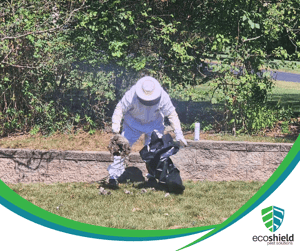 If you have discovered one active nest, a one-time treatment may be all you need.
At EcoShield Pest Solutions, we offer a one-time stinging insect removal service for homeowners dealing with an active wasp or other stinging insect problem. However, if stinging insects and other pests are a recurring concern around your home, a year-round pest protection plan may be a better fit.
Our year-round protection option is designed to provide ongoing pest management rather than waiting until a problem develops. This proactive approach can help homeowners stay ahead of pest activity throughout the year. The right choice depends on your home's individual needs, the type of pest activity you're experiencing, and the level of protection you want.
When Should You Call a Professional for Wasp Removal?
You should consider professional wasp removal if:
- You have discovered an active nest near your home.
- Wasps are entering or exiting a wall, attic, chimney, or other enclosed space.
- The nest is high off the ground or otherwise difficult to reach.
- There appears to be significant wasp activity.
- You have attempted DIY treatment and the wasps remain active.
- The nest is located near an area where children, pets, or family members regularly spend time.
- You are unsure what type of stinging insect you are dealing with.
When an active nest is involved, it is generally best to avoid disturbing it until you can determine the safest way to address the problem.
Get Professional Wasp Nest Removal From EcoShield Pest Solutions
 A wasp nest doesn't have to become a season-long headache. Whether you need help with a single active nest or want ongoing protection against stinging insects and other pests, EcoShield Pest Solutions can help you determine the right solution for your home.
Our one-time stinging insect removal service is an option for homeowners who need immediate help addressing an active nest. For those looking for more comprehensive protection, our year-round pest control option provides ongoing coverage designed around your home's needs.
Don't risk getting stung trying to handle an active nest yourself.
Contact EcoShield Pest Solutions today to schedule an inspection and find out which stinging insect protection option is right for your home.
Ready to Get Rid of That Wasp Nest?
Don't wait for the nest to become a bigger problem. Fill out the form on this page today to schedule your service and take the sting out of pest control.