
Finding a wasp nest around your home can be unsettling. Whether you spot a papery nest hanging beneath your roofline, discover wasps entering a wall void, or notice increased wasp activity around your yard, it is natural to want the problem taken care of quickly. However, treating a wasp nest is not always as simple as grabbing a can of insecticide and spraying it. The type of wasp, location of the nest, size of the colony, and time of year can all affect how the situation should be handled.
Understanding what you are dealing with is an important first step toward protecting your family and property.
What Types of Wasps Build Nests Around Homes?
Not all wasps behave the same way, and identifying the species can help determine the safest approach for removal. Some of the most common stinging insects homeowners encounter include yellowjackets, paper wasps, bald-faced hornets, and European hornets.
Yellowjackets
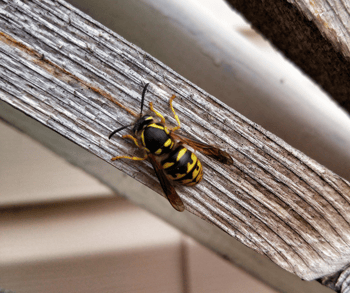 Yellowjackets are often considered one of the more aggressive types of wasps. They can build nests in the ground, inside wall voids, beneath structures, or in other protected areas. Yellowjackets are especially common around food and garbage, which can make outdoor gatherings challenging during the warmer months.
Unlike many wasps, yellowjackets can continue to defend their nest aggressively when they feel threatened. Their ability to sting repeatedly makes nests located near high-traffic areas particularly concerning.
Paper Wasps
Paper wasps are recognizable by their long, slender bodies and open, umbrella-shaped nests. Their nests are often attached to protected areas such as porch ceilings, roof overhangs, eaves, sheds, and other sheltered locations.
Paper wasps are generally less aggressive than yellowjackets when away from their nest, but they can become defensive when their nest is disturbed.
Bald-Faced Hornets
Despite their name, bald-faced hornets are actually a type of yellowjacket. They are known for their distinctive black-and-white coloring and large, enclosed paper nests.
These nests are commonly found hanging from trees, shrubs, rooflines, or other elevated locations. A colony can contain many workers, and disturbing the nest can result in defensive behavior from multiple insects.
European Hornets
European hornets are larger than many other wasps homeowners encounter. They often construct nests in protected cavities such as hollow trees, wall voids, attics, or other enclosed spaces.
Because nests may be hidden from view, homeowners may notice the insects before they ever find the actual nest.
What Types of Wasp Nests Are There?
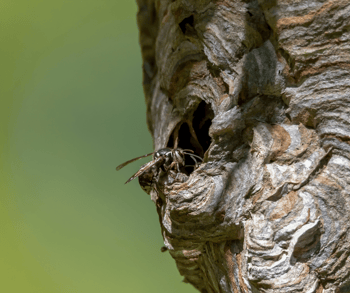 Wasp nests can vary significantly in appearance and location.
Some species build open-comb nests, where the individual cells are visible. Paper wasp nests are a common example.
Other species build enclosed nests made from a paper-like material. Bald-faced hornet nests are a familiar example and are often large and football-shaped.
Some wasps also build nests underground or inside structures. These nests can be particularly difficult to locate and treat because the colony may be hidden behind walls, beneath landscaping, or inside another protected space.
The nest's location matters just as much as its appearance. A nest hanging from a tree may require a different approach than one located inside a wall or underneath a roof overhang.
Why You Should Think Twice About DIY Wasp Nest Removal
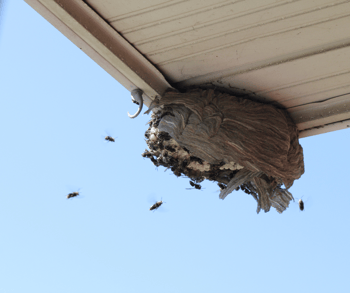 When homeowners discover a wasp nest, DIY removal can seem like the quickest and least expensive solution. Unfortunately, attempting to remove an active nest yourself can put you at significant risk of being stung.
One of the biggest concerns is that disturbing a nest can trigger defensive behavior. Multiple wasps may emerge at once, and some species can sting repeatedly.
Spraying the visible portion of a nest also does not necessarily mean the entire colony has been eliminated. If the nest is located inside a wall, attic, tree cavity, or other inaccessible area, treating only the insects you can see may leave the colony intact.
There is also the possibility of accidentally driving wasps deeper into a structure. In some situations, improper treatment can cause insects to find another route into living spaces.
For these reasons, homeowners should use caution when dealing with an active nest, particularly when the nest is large, difficult to access, or located near doors, windows, play areas, or other frequently used spaces.
So, When Is the Best Time to Treat a Wasp Nest?
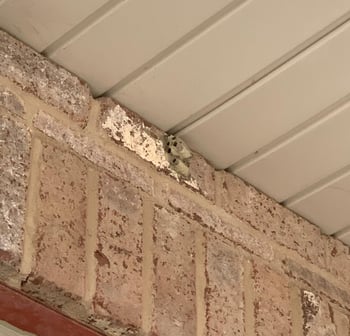 The best time to treat a wasp nest depends on several factors, including the species, nest location, colony size, and level of activity. In general, early intervention is preferable to waiting for a nest to become larger and more established.
Wasp colonies typically become more active as the season progresses. A nest that starts relatively small can grow significantly, increasing the number of wasps defending it.
That means homeowners should not necessarily wait until a nest becomes large or activity becomes overwhelming before addressing it. If you notice an active nest around your property, having it evaluated early can help determine the appropriate course of action.
Professional treatment can also be particularly important when a nest is located in an area where people or pets regularly pass, such as near a doorway, patio, deck, playground, or walkway.
Does the Time of Day Matter?
The time of day can also be an important consideration when treating an active wasp nest. Wasps may be less active inside or around the nest during certain periods, but this does not make DIY treatment safe.
Professional pest control technicians can evaluate the nest and determine the safest treatment strategy based on the species, location, and activity level rather than relying solely on the time of day.
What Happens After a Wasp Nest Is Treated?
Treating a wasp nest is not always the end of the process. Depending on the situation, it may be necessary to monitor the area for continued activity.
If wasps are entering a home through cracks, gaps, vents, wall voids, or other openings, addressing those potential entry points can also help reduce the likelihood of future problems.
It is important to remember that finding one nest does not necessarily mean it is the only pest concern around your property. A professional inspection can help identify conditions that may be attracting or providing access to stinging insects.
How EcoShield Pest Solutions Can Help
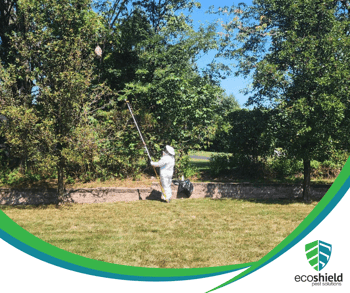 Wasp and hornet nests can be more than a nuisance. When located close to your home or areas your family uses regularly, they can become a safety concern.
EcoShield Pest Solutions offers professional stinging insect removal services designed to address active wasp and hornet nests. Our technicians can help identify the type of stinging insect, locate the nest, evaluate the situation, and determine an appropriate treatment approach.
EcoShield also offers year-round pest protection for homeowners who want ongoing coverage rather than addressing individual pest problems as they appear.
If you have discovered a wasp nest on your property, don't put yourself at risk trying to remove it yourself. Contact EcoShield Pest Solutions to have the nest professionally evaluated and treated.